

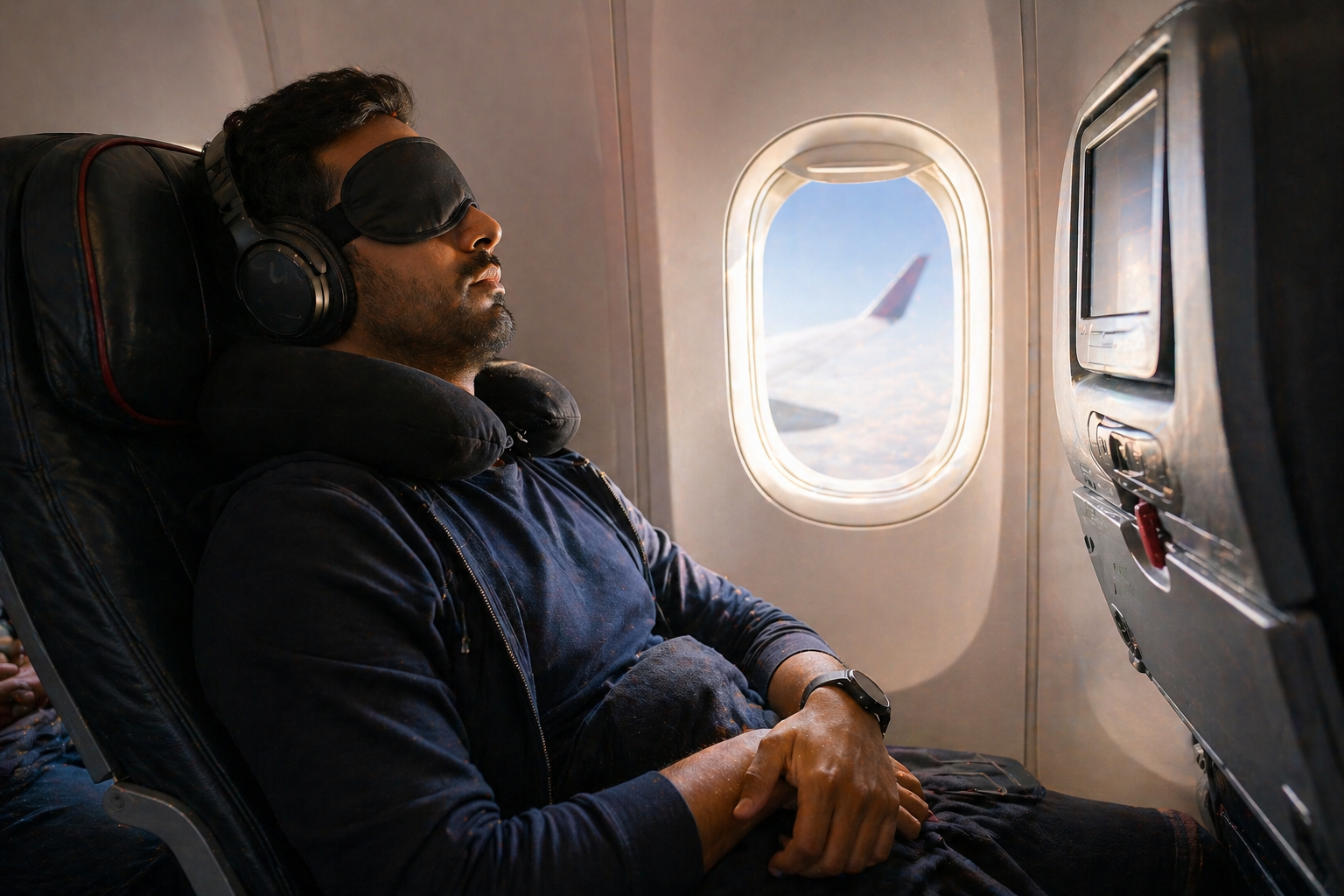
The Truth About Jet Lag 😴
Overnight flights, or “red-eyes,” sound like the perfect travel hack – you sleep on the plane, save daylight hours, and wake up ready to explore. But in reality, most travellers end up bleary-eyed, dehydrated, and out of sync with local time.
That’s jet lag, caused by a disruption in your circadian rhythm – your body’s internal clock that controls when you sleep, eat, and feel alert. Crossing time zones confuses that rhythm, leading to fatigue, poor focus, and restless nights.
Fortunately, jet lag isn’t inevitable. With smart planning and a few evidence-backed strategies, you can trick your body into adjusting faster – and step off the plane looking (and feeling) far more awake.
Before You Fly: Prepare Your Body 🧘♀️
1. Shift Your Sleep Schedule Early
Your jet lag prevention starts before you reach the airport. Gradually adjust your bedtime 3-4 days before your trip:
- Flying east: Sleep and wake up earlier.
- Flying west: Sleep and wake up later.
This small shift helps your body begin syncing with your destination’s time zone, reducing the shock of sudden change.
2. Hydrate Generously – Before and During
Cabin air dries you out quickly. Dehydration amplifies fatigue, headaches, and sluggishness – all symptoms of jet lag.
- Drink at least 250 ml of water per flight hour.
- Avoid caffeine and alcohol – they disrupt your sleep cycle and increase dehydration.
Tip: Carry a reusable bottle and ask cabin crew for refills instead of relying on small cups.
3. Pack Sleep Essentials
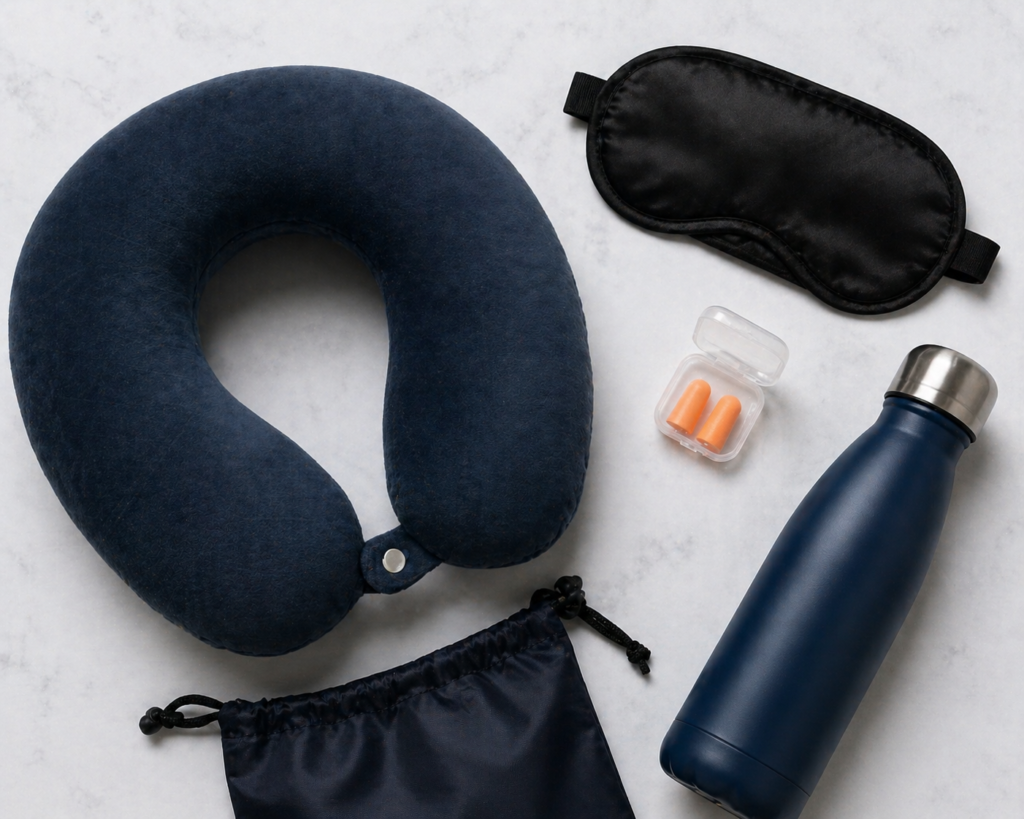
Good rest mid-air depends on comfort. Bring:
- A supportive neck pillow
- A soft eye mask
- Noise-cancelling headphones or earplugs
- A lightweight blanket or scarf
Small comforts can make economy class feel more bearable and make real sleep possible.
During The Flight: Sync With Destination Time 🕒
4. Sleep Strategically
Time your rest to match your arrival:
- Landing in the morning → Sleep mid-flight.
- Landing in the evening → Stay awake until destination bedtime.
Use your sleep mask, silence notifications, and adjust your watch to the new time zone as soon as you board.
5. Eat Light and Time Your Meals
Heavy in-flight meals can mess with your body clock and digestion. Stick to easy-to-digest foods:
- Protein-heavy meals (like eggs or lentils) for energy earlier in the flight.
- Light carb meals (like rice, fruit, or yoghurt) near landing to help you relax.
If you’re not hungry, skip the meal, your metabolism is already confused. Focus on hydration instead.
6. Move Every 2 Hours
Circulation slows at altitude. Every couple of hours:
- Take short walks.
- Do ankle rolls, shoulder shrugs, and gentle stretches in your seat.
This prevents stiffness and keeps your blood oxygenated, helping you feel fresher upon landing.
After Landing: Reset Your Body Clock 🌅
7. Step Into Sunlight Immediately

Natural light is your body’s best timekeeper. Spend at least 30 minutes outdoors after arrival.
- Landed in the morning? Soak up sunlight to tell your body it’s daytime.
- Landed at night? Dim the lights and avoid screens, let your brain ease into rest mode.
Sunlight resets your melatonin production, helping your sleep cycle realign.
8. Avoid Long Naps
A 4-hour “power nap” might sound tempting but will keep you awake all night.
If you must nap, limit it to 20–30 minutes, just enough to restore alertness without disrupting your nighttime rest.
9. Eat By Local Clock
Even if your body insists it’s breakfast time, eat meals at the local schedule. This helps your metabolism adapt faster.
Try balanced meals with carbs and protein; think grilled fish and rice, or eggs and toast, to stabilise blood sugar levels.
10. Move To Recharge
Don’t collapse in bed right away. A short walk, yoga session, or gentle stretching will help blood flow and reduce stiffness. Movement also boosts serotonin, improving mood and alertness.
Quick Science Behind Jet Lag 🧬
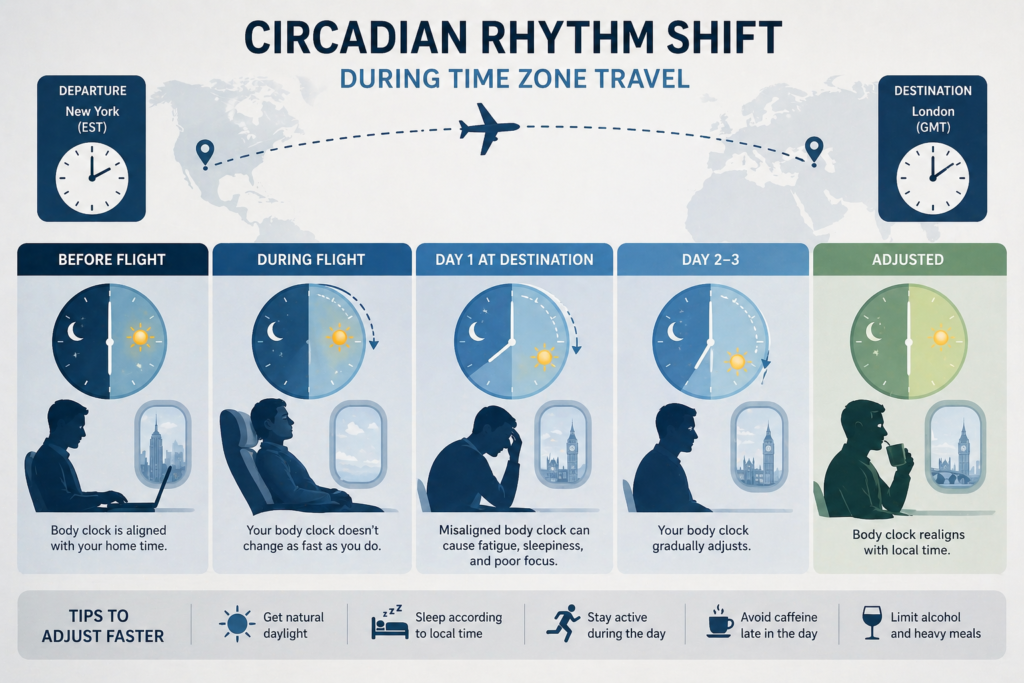
Your body’s circadian rhythm works on a 24-hour cycle tied to light exposure. When you fly across time zones, your internal clock can’t catch up immediately; creating a mismatch between your environment and your body’s sense of time.
Key disruptors include:
- Rapid light/dark changes
- Dehydration
- Caffeine/alcohol use
- Lack of movement
Your goal: gradually realign your rhythm by controlling light, sleep, food, and activity.
The Takeaway 🌍
Jet lag doesn’t have to ruin your first few days abroad. By preparing ahead, hydrating, timing your rest, and embracing sunlight, you can trick your body clock into adjusting faster.
Overnight flights might never feel like home, but they don’t have to leave you looking like you spent the night in a suitcase either.
Next time you book that red-eye, treat it as your secret productivity window, sleep strategically, land ready, and conquer your trip from day one.
Read more practical travel wellness guides at VurayTravels.com.
