

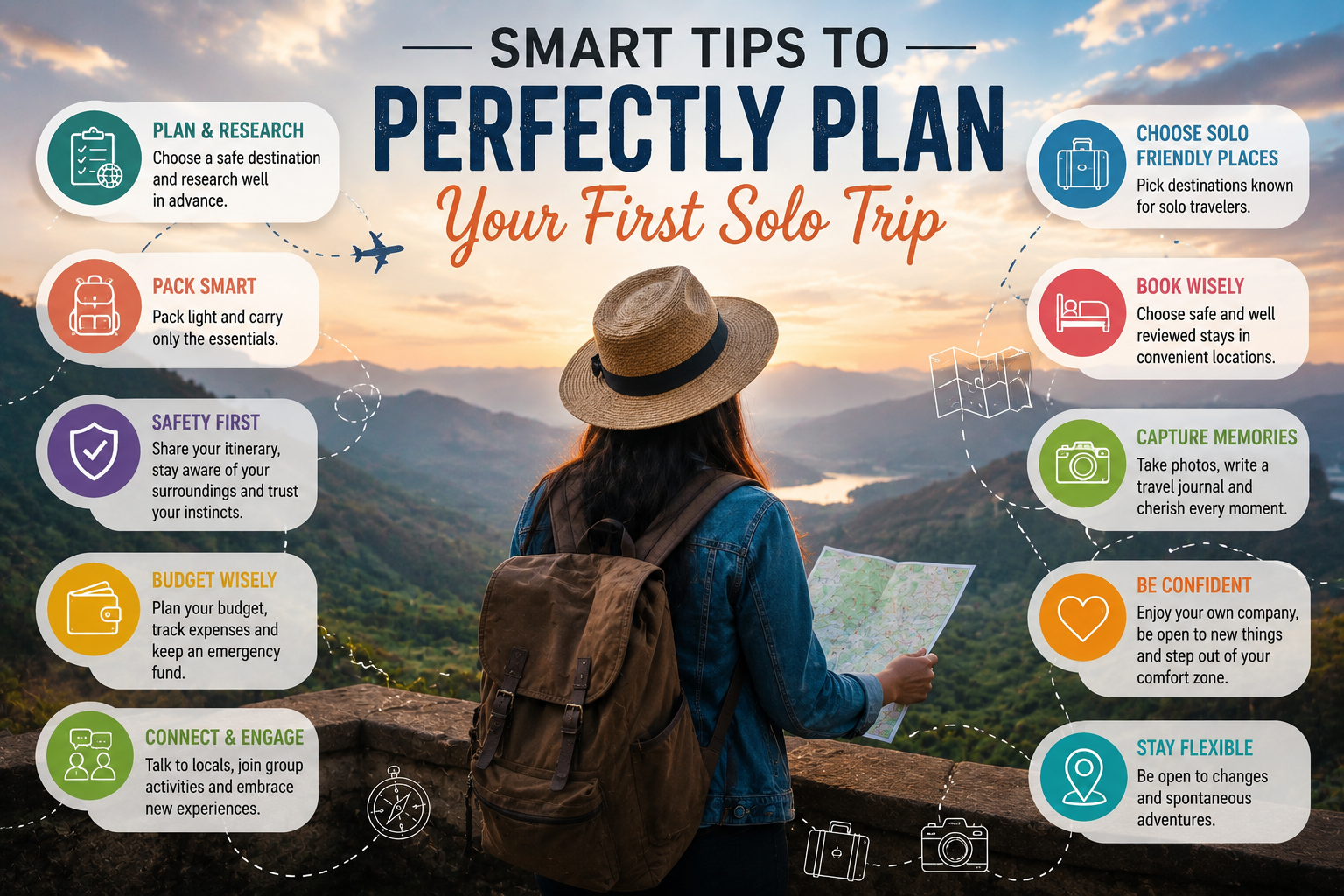
There’s a strange moment before every first solo trip.
You’re excited. Nervous. Curious. Slightly terrified.
One minute you’re imagining yourself sipping coffee in a mountain café somewhere in Himachal or wandering through colorful streets in Bangkok. The next minute, you’re wondering whether traveling alone is actually a terrible idea.
That emotional tug-of-war is normal.
The truth is, your first solo trip is less about travel and more about discovering who you become when nobody else is planning your day, choosing your meals, setting your schedule, or influencing your decisions.
You learn independence very quickly.
And if planned smartly, solo travel can become one of the most rewarding experiences of your life.
But here’s the thing most Instagram reels don’t tell you: great solo trips rarely happen by accident. They happen because of good planning, smart decisions, and realistic expectations.
This guide will help you plan your first solo adventure like someone who has done it before; avoiding rookie mistakes while still leaving enough room for spontaneity.
Why Everyone Should Travel Solo at Least Once
Before we dive into logistics, let’s address the bigger question:
Why solo travel at all?
Because traveling alone teaches you things group trips never can.
You become more observant. More confident. More adaptable. You stop waiting for consensus. You learn how to solve problems calmly. You discover what you genuinely enjoy.
You also meet more people.
Ironically, solo travelers are often less lonely than groups because they naturally interact more with locals, hostel travelers, café owners, guides, and fellow explorers.
And no, you do not need to be an extrovert.
Some of the best solo travelers are quiet observers who simply enjoy experiencing the world at their own pace.
Step 1: Choose the Right Destination for Your First Solo Trip
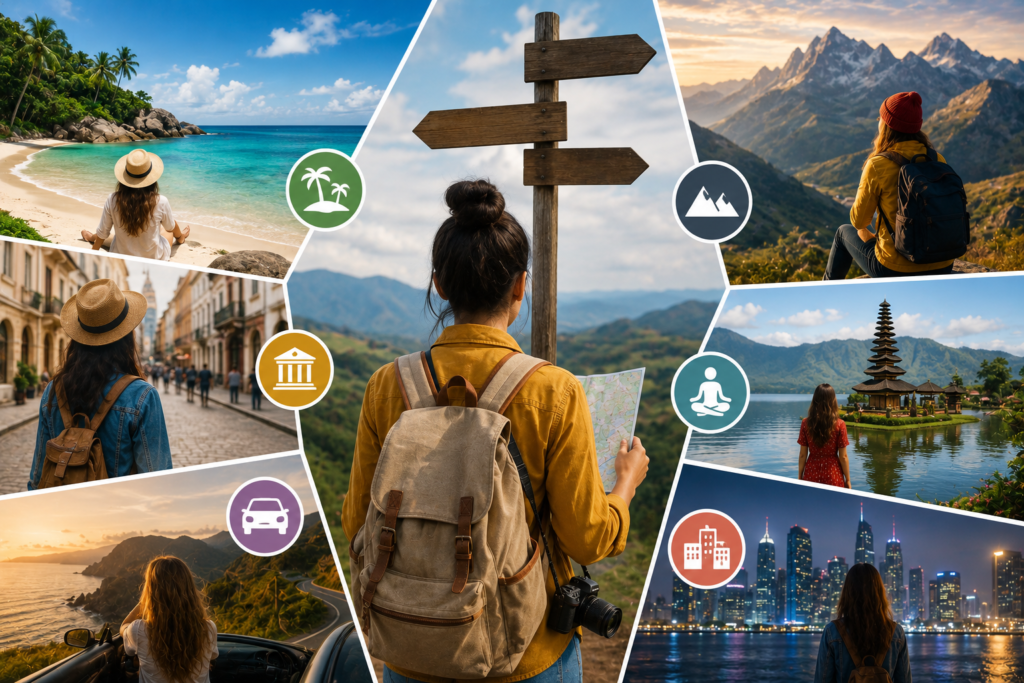
Your first solo destination matters more than most people realize.
This is not the time to choose the most remote, chaotic, or logistically difficult place just because it looks adventurous on social media.
Your first trip should build confidence, not destroy it.
What Makes a Good First Solo Destination?
Look for places that are:
- Safe for tourists
- Easy to navigate
- Budget-friendly
- Well connected by transport
- Popular among other solo travelers
- Rich in accommodation options
Great First Solo Trip Destinations for Indians
| Destination | Why It Works for Beginners |
|---|---|
| Goa | Easy transport, social hostels, relaxed vibe |
| Rishikesh | Safe, spiritual, backpacker-friendly |
| Jaipur | Culture, food, history, manageable pace |
| Kasol | Nature, cafés, solo backpacker crowd |
| Pondicherry | Calm atmosphere and easy exploration |
| Thailand | Affordable international option |
| Vietnam | Budget paradise with backpacker routes |
| Bali | Very solo-traveler friendly |
The biggest mistake beginners make is overestimating how much uncertainty they can comfortably handle.
Start simple. You can always go more adventurous later.
Step 2: Decide Your Travel Style Before Booking Anything
Not everyone enjoys travel the same way.
Some people love fast-paced itineraries. Others want slow mornings and unplanned evenings.
Your solo trip becomes much easier when you know what type of traveler you are.
Ask Yourself:
- Do I enjoy busy cities or quiet nature?
- Do I want social experiences or solitude?
- Am I comfortable with budget backpacking?
- Do I prefer comfort over savings?
- Do I want adventure or relaxation?
Understanding this early helps avoid disappointment later.
A common beginner mistake is copying someone else’s itinerary from YouTube or Instagram without considering personal preferences.
Just because someone enjoyed partying in Phuket for five nights doesn’t mean you will.
Travel gets better when it becomes personal.
Step 3: Create a Realistic Budget
Solo travel doesn’t have to be expensive.
But lack of budgeting creates stress very quickly.
The smartest travelers separate their budget into categories.
Simple Solo Travel Budget Framework
| Expense Category | Estimated Share |
|---|---|
| Transport | 30% |
| Accommodation | 25% |
| Food | 20% |
| Activities | 15% |
| Emergency Buffer | 10% |
Budgeting Tips That Actually Work
1. Book Flights Early
Flights are usually cheaper 4–8 weeks before departure for domestic travel and 2–4 months for international trips.
2. Stay in Hostels
Hostels are not just cheaper, they are social hubs for solo travelers.
You’ll often find:
- Walking tours
- Pub crawls
- Shared meals
- Local recommendations
- Instant travel friends
3. Avoid Overplanning Activities
Many beginners book too many paid activities in advance.
Leave breathing room.
Some of your best travel memories will come from random conversations, hidden cafés, local markets, or spontaneous detours.
4. Carry Emergency Money
Always keep backup funds separate from your main wallet.
This single habit can save an entire trip.
Step 4: Book the First Few Days Properly
Experienced travelers can “figure things out” on arrival.
Beginners should not try to travel like experienced backpackers immediately.
For your first solo trip:
- Book your first accommodation in advance
- Arrange airport/station transfer if arriving late
- Save offline maps
- Research local transport basics
- Keep digital and physical copies of documents
The goal is reducing avoidable stress.
Confidence grows after you arrive safely and settle in.
Step 5: Pack Light – Seriously
Almost every first-time solo traveler overpacks.
And almost every experienced traveler eventually becomes obsessed with packing lighter.
Because dragging heavy luggage through stairs, buses, uneven roads, train stations, or crowded streets becomes exhausting very quickly.
Ideal Solo Travel Packing Checklist
Essentials
- Passport/ID
- Phone + charger
- Power bank
- Wallet/cards/cash
- Basic medicines
- Water bottle
- Earphones
Clothing
Pack versatile outfits instead of “just in case” clothes.
A good rule:
- 4–5 tops
- 2–3 bottoms
- 1 jacket
- Comfortable footwear
Smart Additions
- Small lock
- Quick-dry towel
- Universal adapter
- Sling bag/daypack
- Reusable laundry pouch
Your future self will thank you for packing lighter.
Step 6: Safety Matters More Than Looking Adventurous
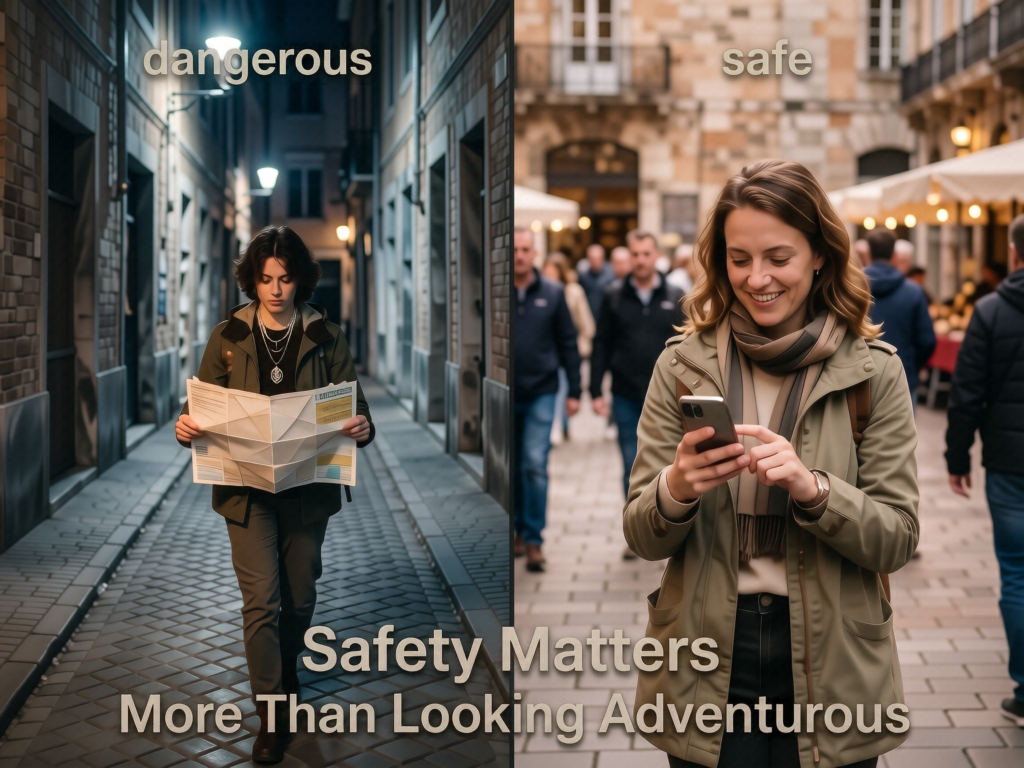
Solo travel is liberating, but awareness matters.
Most travel problems are preventable with basic precautions.
Practical Safety Tips for Solo Travelers
Share Your Itinerary
At least one trusted person should know:
- Your accommodation
- Flight/train details
- Approximate plans
Don’t Overshare With Strangers
Being friendly is great. Giving away personal details too quickly is not.
Trust Your Instincts
If something feels off, leave.
You do not owe politeness at the cost of safety.
Avoid Late-Night Isolation Initially
Especially on your first solo trip, avoid unfamiliar isolated areas at night.
Keep Documents Digitally Backed Up
Store scanned copies in:
- Cloud storage
- Phone offline folder
Step 7: Learn the Art of Being Alone
This is where solo travel becomes emotionally interesting.
Your first few solo meals may feel awkward.
You may instinctively reach for your phone constantly.
You might feel lonely occasionally.
That’s normal.
Most people are uncomfortable being alone because modern life constantly distracts us from ourselves.
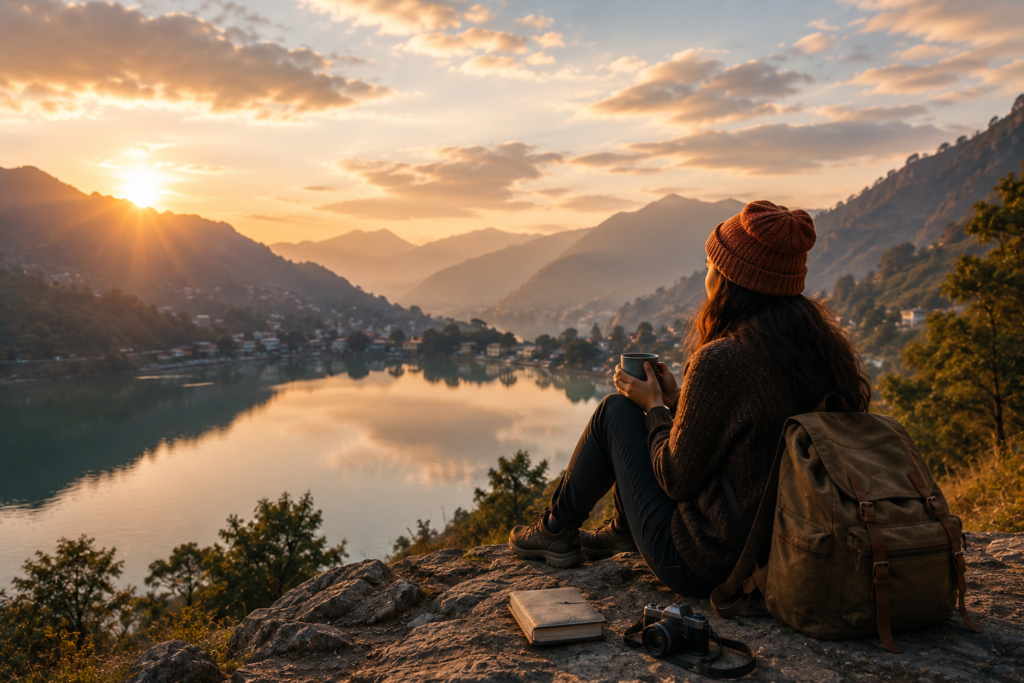
Solo travel removes that noise.
And eventually, something changes.
You stop needing constant stimulation.
You start observing more.
You notice architecture, conversations, sunsets, local routines, music, smells, silence.
You become present.
That’s when solo travel transforms from “trip” into experience.
Step 8: Don’t Chase a Perfect Itinerary
One of the biggest mistakes new travelers make is trying to optimize every hour.
Your itinerary should guide you, not imprison you.
Leave room for:
- Unexpected recommendations
- Rest days
- Weather changes
- Random discoveries
- Doing absolutely nothing
Some of the best travel memories are unplanned.
A café you accidentally found.
A train conversation.
A sunset you almost skipped.
A local dish you never intended to try.
Rigid itineraries often kill spontaneity.
Step 9: Meet People; But Don’t Force It
Many people secretly worry about loneliness before solo trips.
Here’s the reality:
You’ll probably meet more people traveling solo than you do in everyday life.
But don’t pressure yourself to become hyper-social.
Easy Ways to Meet People While Traveling
- Stay in social hostels
- Join walking tours
- Take local workshops
- Visit cafés
- Use co-working spaces
- Attend hostel events
- Start simple conversations
Most travelers are surprisingly open to interaction.
And sometimes, even brief conversations become unforgettable memories.
Step 10: Learn Basic Travel Problem-Solving
Travel rarely goes 100% according to plan.
Flights get delayed.
Weather changes.
Phones die.
Bookings get mixed up.
The difference between stressful travelers and confident travelers is not luck.
It’s adaptability.
When Things Go Wrong:
- Stay calm first
- Solve one problem at a time
- Ask locals politely
- Keep emergency cash
- Use offline maps
- Avoid panic decisions
Travel rewards emotional flexibility.
Step 11: Put Your Phone Away More Often
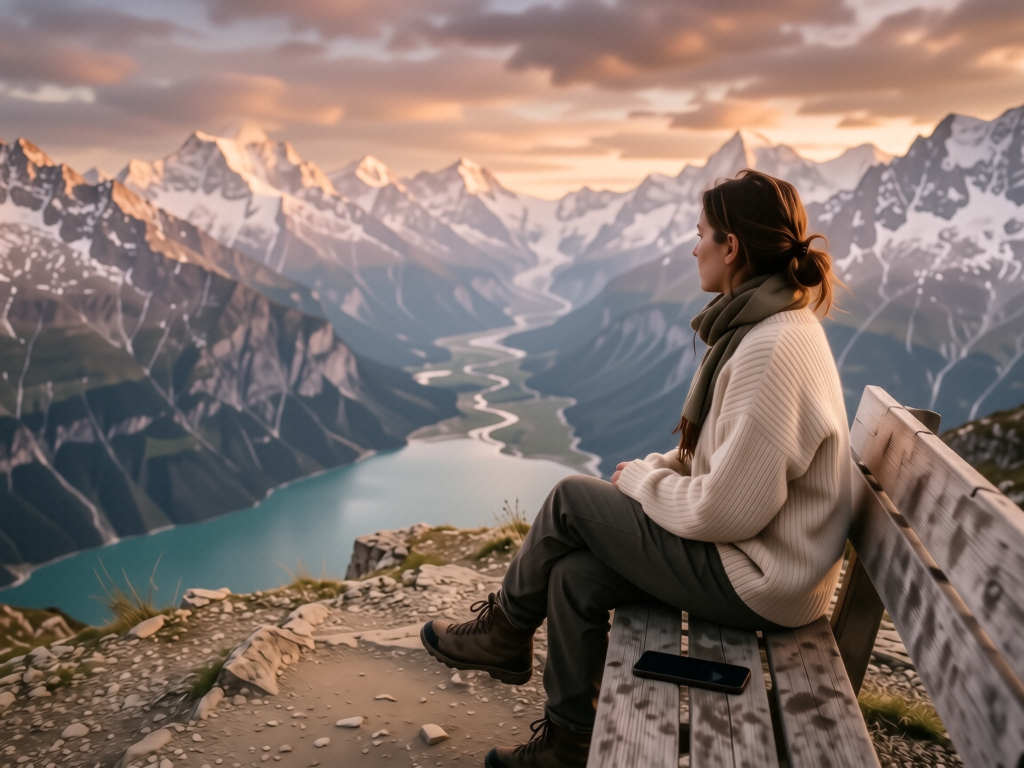
This might be the most underrated travel advice.
If you spend the entire trip documenting it, you may barely experience it.
Take photos, absolutely.
But don’t turn the entire journey into content production.
Some moments deserve your full attention:
- Sunrise views
- Local conversations
- Train journeys
- Silent walks
- Ocean sounds
- Mountain air
Not everything meaningful needs uploading.
Step 12: Eat Local Food Without Fear
Food is one of the fastest ways to connect with a place.
Some of your strongest travel memories will come from meals.
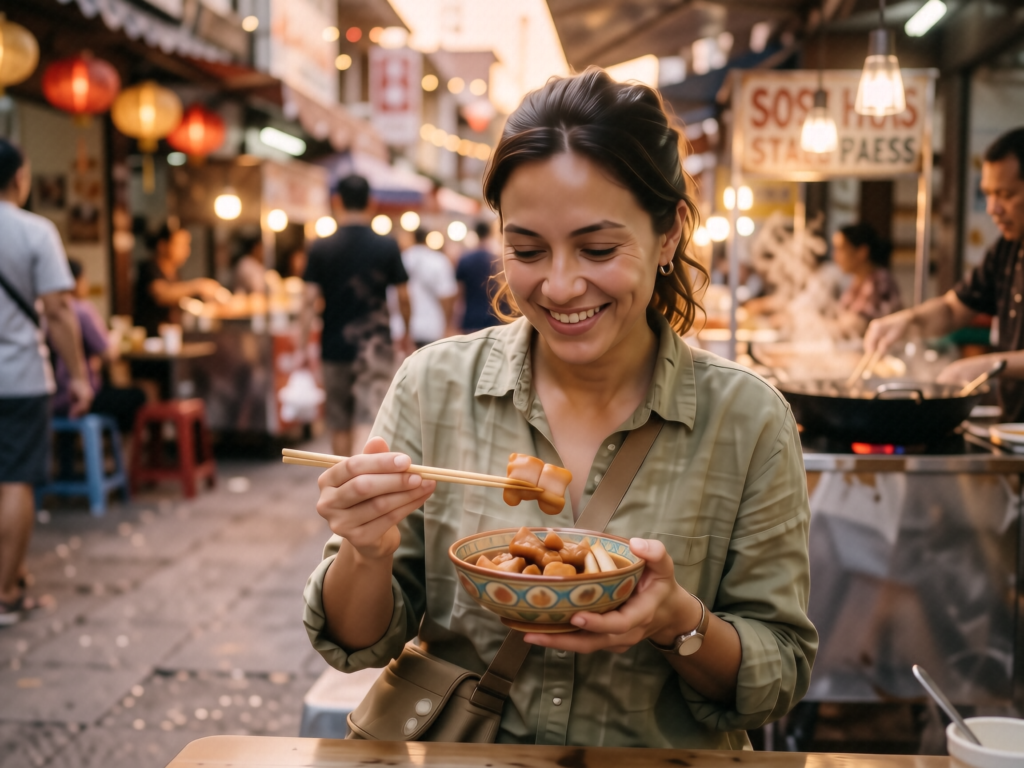
Smart Food Tips for Solo Travelers
- Eat where locals eat
- Start with popular dishes
- Carry digestive medicines
- Stay hydrated
- Don’t skip breakfast
- Avoid risky street food initially if unsure
Trying local cuisine adds depth to travel that sightseeing alone cannot.
Step 13: Keep Expectations Realistic
Not every moment will feel magical.
Some days may feel:
- Lonely
- Tiring
- Boring
- Confusing
- Uncomfortable
That’s still part of the experience.
Social media often romanticizes travel unrealistically.
Real travel includes missed buses, sweaty backpacks, awkward situations, and occasional homesickness.
And strangely, those imperfect moments often become your favorite stories later.
Step 14: Document Your Journey Properly
Years later, you won’t remember everything.
Document your trip beyond photos.
Great Ways to Preserve Memories
- Travel journal
- Voice notes
- Small daily reflections
- Expense tracker
- Printed photos later
- Ticket stubs and souvenirs
The emotional details fade fastest unless captured intentionally.
Step 15: Your First Solo Trip Will Change You
Not dramatically overnight.
But subtly.
You return home realizing:
- You can handle uncertainty
- You’re more capable than you thought
- Independence feels empowering
- Comfort zones were smaller than reality
And usually, one solo trip leads to another.
Because once you discover the freedom of traveling on your own terms, it becomes difficult to forget.
Final Thoughts
Your first solo trip does not need to be perfect.
It just needs to begin.
You do not need to be fearless.
You do not need to be rich.
You do not need to have everything figured out.
You simply need enough courage to book the ticket and take the first step.
The confidence comes later.
Every experienced solo traveler was once someone nervously checking maps, overthinking luggage, and wondering whether they were making a mistake.
Then they went anyway.
And that decision changed something inside them forever.
Quick Solo Travel Checklist
Before Leaving
✔ Book first accommodation
✔ Keep emergency cash
✔ Save offline maps
✔ Share itinerary with family
✔ Pack light
✔ Buy travel insurance (for international trips)
During the Trip
✔ Stay aware
✔ Talk to locals
✔ Keep backup documents
✔ Stay flexible
✔ Avoid overplanning
✔ Enjoy solitude
After Returning
✔ Reflect on lessons learned
✔ Organize memories
✔ Plan your next adventure
Disclaimer
This article is intended for informational and general travel guidance purposes only. Travel conditions, safety situations, visa policies, pricing, transport availability, and local regulations may change over time. Readers are advised to independently verify all travel-related information, including accommodation, transportation, health advisories, and safety guidelines before planning their trip. vTrago is not responsible for personal travel decisions, losses, delays, or experiences arising from the use of this information.
